
For years, I genuinely believed I was eating decently. I cooked at home, limited the obvious junk, and tried not to overdo the sweets.
Then I came across a video clip from The Diary of a CEO featuring Dr. Robert Lustig that quietly shook that belief. It wasn’t loud or dramatic, but it asked a question that stayed with me:
What if the biggest danger in our food isn’t “junk” — but what we’ve normalized as “safe”?
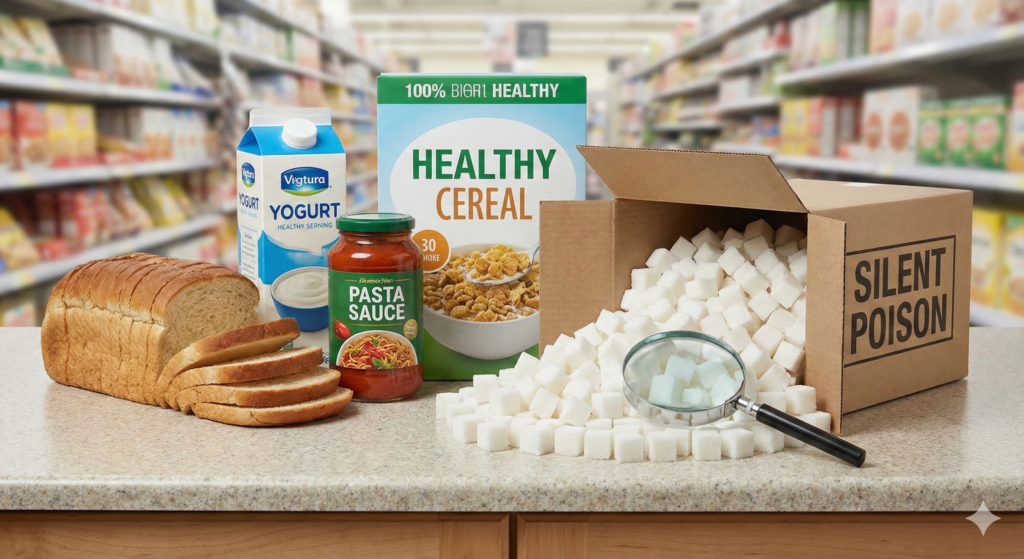
According to Dr. Lustig, 80% of processed and packaged foods contain a “silent poison” that is destroying our metabolic health. And the scariest part? It’s hiding in plain sight.
The Silent Poison: Added Sugar
We think we know what sugar is. It’s the white stuff in the bowl, right? But the video explains that sugar is everywhere—even in foods that don’t taste sweet.
After watching, I checked the labels in my own kitchen: Bread, sauces, flavored curd, and “healthy” breakfast cereals. Sugar was everywhere, often hiding behind technical names to trick us.
Common disguises to look out for:
- High fructose corn syrup
- Maltodextrin
- Dextrose
- Glucose syrup
- Cane sugar
- Fruit juice concentrate
Different names, but the same metabolic impact.
It’s Not About Willpower, It’s Biochemistry
This was the biggest “aha” moment for me. We are often told that if we gain weight or feel lethargic, we are just lazy or gluttonous. Dr. Lustig flips the script: It’s not a character flaw, it’s a chemical hijack.
The video breaks down a crucial relationship between two hormones:
- Leptin: The hormone that tells your brain, “I’m full, stop eating.”
- Insulin: The hormone released when we eat sugar/refined carbs.
Here is the problem: High insulin blocks Leptin.
When you eat hidden sugars, your insulin spikes. Your brain never gets the “I’m full” signal. You feel hungry, tired, and unmotivated—not because you lack discipline, but because your biochemistry is fighting against you.
The “Healthy” Food Trap
One uncomfortable truth from the video is that the “Health Food” aisle is often the most dangerous place in the store.
When companies remove fat to slap a “Low Fat” label on a product, the food tastes like cardboard. To fix the taste, they dump in sugar. So, “Heart Healthy” or “Low Cholesterol” on a box often really means “High Sugar.”
Marketing speaks louder than nutrition labels.
The Scale Doesn’t Tell the Whole Story (The 3 Fats)
Dr. Lustig explains that you can be thin on the outside but sick on the inside. It comes down to where your body stores fat:
- Subcutaneous Fat: The fat you can pinch. Surprisingly, this is the “safest” fat.
- Visceral Fat (Belly Fat): Driven by stress (Cortisol).
- Liver Fat (The Silent Killer): Driven by sugar and alcohol.
You can’t see liver fat, but it leads to Type 2 Diabetes and metabolic disease. This is why this poison is “silent”—it accumulates quietly as fatigue, inflammation, and insulin resistance long before a doctor diagnoses you.
The Indian Connection: Carbs, Culture, and the Diabetes Crisis
This video hit home hard for me because, in India, our relationship with carbohydrates is deeply cultural. We don’t just eat carbs; our entire plates are built around them.
Dr. Lustig’s message isn’t just about Western cereal boxes; it applies directly to our thalis.
The Hidden “Sugar” in Savory Food
In India, we often think, “I don’t eat much mithai (sweets), so I’m safe.” But biology doesn’t distinguish between a bowl of sugar and a bowl of refined white rice or soft, maida-based naan.
Once they hit your stomach, highly refined carbohydrates convert rapidly into glucose, spiking insulin just like table sugar does.
- The White Rice Reliance: We’ve moved away from traditional, fibrous millets to polished white rice, which is almost pure starch.
- The “Chai-Biscuit” Trap: The mandatory glucose biscuits or rusks with morning tea seem harmless, but they are essentially sugar and refined flour bombs that kickstart the daily insulin rollercoaster.
- Savory Snacks: Look at the back of a packet of bhujia or “diet” chiwda. You will often find sugar or maltodextrin listed to balance the spice, alongside refined flours and unhealthy oils.
It’s no coincidence that India is known as the “Diabetes Capital of the World.” We are biologically prone to storing liver fat (that silent killer Dr. Lustig mentioned), and our modern, high-refined-carb diet is fuel on the fire.
How We Can Bring About Change (Starting at Home)
Changing a culture is hard, especially when food is love in Indian families. Trying to refuse a second helping of rice or a laddu from an elder can feel disrespectful.
But societal change starts in our own kitchens. Here is how we can start turning the tide:
- Flip the Plate Ratio: The traditional Indian plate is 70% rice/roti and 30% sabzi (vegetables) and dal. We need to flip that. Make vegetables and protein the main event, and use grains as a side dish.
- Stop Normalizing “Kid Food”: We need to stop giving children sugary juices, packaged cakes, and biscuits as standard snacks. We are setting them up for metabolic issues before they even hit puberty. Real fruit, nuts, or homemade snacks should be the norm.
- Rethink “Healthy Swaps”: Switching from white sugar to jaggery (gur) or honey is still a sugar spike to your liver. The goal isn’t different sugar; it’s less sugar.
- Kitchen Activism: The person who controls the grocery list controls the family’s health. We need to educate our mothers, fathers, and cooks that “loving” someone with food doesn’t have to mean overloading them with refined carbs.
We can still enjoy our rich culinary heritage, but we need to return to whole ingredients and recognize that the modern, refined versions of our staples are silently harming us.
Small Changes I’ve Started Making
The video isn’t a “quit sugar forever” manifesto. It’s about awareness. Natural sugars in whole fruits are fine because they come with fiber. The enemy is the processed, added stuff.
Instead of drastic rules, I’ve adopted practical habits:
- Eat Real Food: If it came out of the ground (or ate something that did), it’s generally safe.
- Check the First 3 Ingredients: If sugar (or one of its aliases) is at the top, I put it back.
- Ignore the Front of the Box: Don’t trust “Immunity Boosting” or “Natural.” Read the back.
- Cut Liquid Sugar: Juice, soda, and sweet teas are pure metabolic hits with no fiber to slow them down.
A Bigger Life Lesson
This video wasn’t just about nutrition. It reminded me of a deeper truth: The most harmful things in life are the ones we stop questioning.
When something becomes “normal”—like sugar in bread or “low fat” yogurts—we stop being alert. You don’t need fear, and you don’t need to be perfect. You just need to be aware.
🔗 Watch the Video & Learn More
I strongly recommend watching the full clip. It’s only about 20 minutes, but it explains the science far better than I can.
- 🎥 Watch the Video: THIS Is #1 SILENT Poison in 80% of Food You Eat Daily
- 🌐 Dr. Lustig’s Website: RobertLustig.com (Check here for his books like “Metabolical” and deeper research.)
Disclaimer: I am not a doctor. This post is based on my personal takeaways from the video and is for informational purposes only.

He is a Blogger and a YouTuber based in Jodhpur.
For years, he chased the 5 AM club, the perfect routines, and the “hustle”—and burnt out twice in the process. He realized that most productivity advice isn’t designed for the real world of traffic jams, family obligations, and noisy neighborhoods.
Through LifeLessonLab, he shares practical, “no-nonsense” systems to help you build a meaningful life without losing your mind.
Thank you for sharing this content we badly need to understand the real truth about sugar that silently killing our bodies.